Healthy nails, compatible products, careful handling, and attention to changes matter more than a blanket safe or unsafe label.
Press-on nail damage: what can affect the natural nail?
Press-ons can damage natural nails, although damage is not inevitable with every manicure. Cleveland Clinic identifies application and removal as potential sources of brittleness and breakage. It also notes that longer artificial nails are more likely to contribute to separation of the natural nail from its bed.
The term damage can describe different problems. Removing too much nail material, pulling on a bonded cover, and developing a reaction to a product are not the same process. The appearance of a nail alone does not reliably identify which one occurred.
AAD advises against hiding nail problems under artificial nails. If your uncovered nails look damaged or have unexplained changes, pause new sets and seek professional advice. Do not buff away peeling layers to make a fresh cover sit smoothly, or use another layer of adhesive to conceal the problem. There is no single recovery timetable that applies to every injury or reaction.
| Possible source of damage | What to change or check |
|---|---|
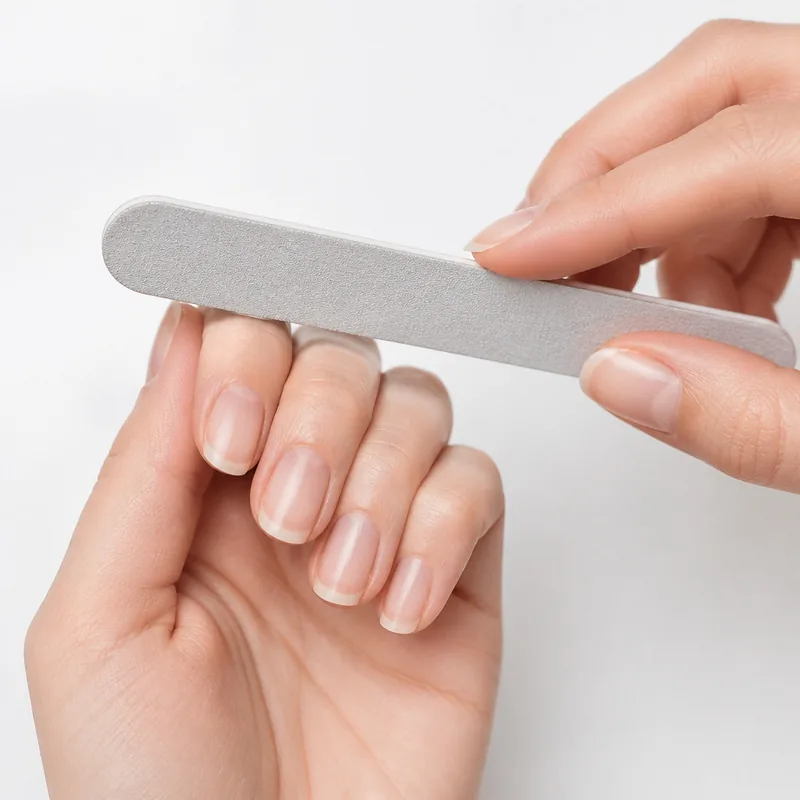
| Filing the natural nail surface | AAD describes how roughening natural nails for acrylic application thins and weakens them. Do not import that preparation into a press-on routine or add aggressive buffing. |
| Pulling, snagging, or forced removal | Do not peel, lever, or twist a cover off while it remains attached. Identify the actual adhesive and follow its removal directions before attempting another set. |
| Adhesive or other product contact | A reaction can involve the cover, glue, or another product. Keep the labels and ingredient lists; changing a brand name alone does not establish different ingredients. |
Are they bad for you beyond the nail itself?
Adhesives and other nail products can cause irritation or allergic reactions. Previous use without trouble does not rule out a later reaction. Cleveland Clinic also explains that trapped moisture beneath press-ons can create conditions where bacteria or fungi grow.
These risks do not establish that every press-on wearer will develop a problem. They do mean that an itchy rash, swelling, tenderness, or unexplained nail discoloration deserves attention. A clinician can assess the cause; an online photograph or symptom list cannot reliably distinguish an allergy from an infection or injury.
Use a short check before each set
Judge the complete process, including removal, rather than choosing only by the strongest hold or longest advertised wear. Keep the packaging so you can identify exactly what touched your nails and skin.
- Check bare nails and surrounding skin for existing problems before covering them.
- Dry-fit each cover. Do not force a size or curve into place.
- Read ingredients, warnings, and the attachment and removal directions.
- Keep cuticles intact; AAD advises against cutting or forcefully pushing them back.
- Follow FDA's advice to use nail products with good ventilation.
What product claims cannot tell you
A no-glue set may still use pre-applied adhesive. That wording does not establish an absence of allergens. FDA also notes that cosmetics generally do not require its premarket approval, apart from most color additives; being available for sale is not an individual safety assessment.
Follow the removal instructions for your actual adhesive and avoid pulling off attached covers. Our removal guide helps identify the appropriate process. Stop and obtain advice if removal hurts or the nail remains firmly attached despite following the directions.
When a general answer is not enough
Discuss a previous adhesive reaction or an ongoing nail problem with a healthcare professional before trying another set. If your question concerns pregnancy, use the separate pregnancy guide: general nail-health advice does not answer product-specific pregnancy exposure questions.
A few common questions
Do press-on nails always ruin your natural nails?
No, but damage can occur. Do not cover damaged nails or force removal, and seek advice about persistent changes.
Are sticky tabs guaranteed safer than nail glue?
No. The ingredients and your history of reactions matter. A glue-free claim does not mean adhesive-free or allergy-free.
Can I wear press-ons continuously if they look fine?
AAD advises against continuous artificial-nail wear. Follow the specific product's wear directions and inspect your uncovered nails between sets.
Sources & reading notes
This editorial summary of the linked health resources has not been medically reviewed. A clinician can assess your symptoms and individual circumstances.