Match the exact adhesive formula to the ingredients your clinician advises you to avoid. A free-from label or a different attachment format is only part of that check.
Read the ingredient name, not just the product category
Acrylates, methacrylates, and cyanoacrylates are related chemical names, but they are not interchangeable ingredient names or allergy diagnoses. Medical literature distinguishes these substances. A reaction to one does not let a shopping guide predict your response to every other formula.
| Label wording | What to clarify |
|---|---|
| Acrylates and methacrylates | These names cover multiple ingredients. HEMA means hydroxyethyl methacrylate; it is one specific substance, not a name for every acrylate. |
| Ethyl cyanoacrylate | An ingredient used in some conventional nail glues. It is different from HEMA and can itself cause allergy; changing to it is not automatic clearance. |
| Acrylates Copolymer or Polymethyl Methacrylate | These identify polymers rather than the corresponding free monomers. FDA explains that residual reactive monomers can remain in acrylic nail materials; the name alone does not establish individual tolerance. |
What HEMA-free and hypoallergenic do not establish
HEMA-free claims the absence of HEMA. It does not establish that all other acrylates, methacrylates, or potential allergens are absent. Ask the manufacturer what an acrylate-free claim includes, especially if the ingredient list uses another related name.
FDA states that there is no federal standard or definition governing hypoallergenic cosmetic claims. Treat that wording as a prompt to inspect the formula, not a substitute for your clinician’s avoidance advice. Low odor, sensitive, and professional wording also do not identify which ingredients are present.
Adhesive tabs still need an ingredient check
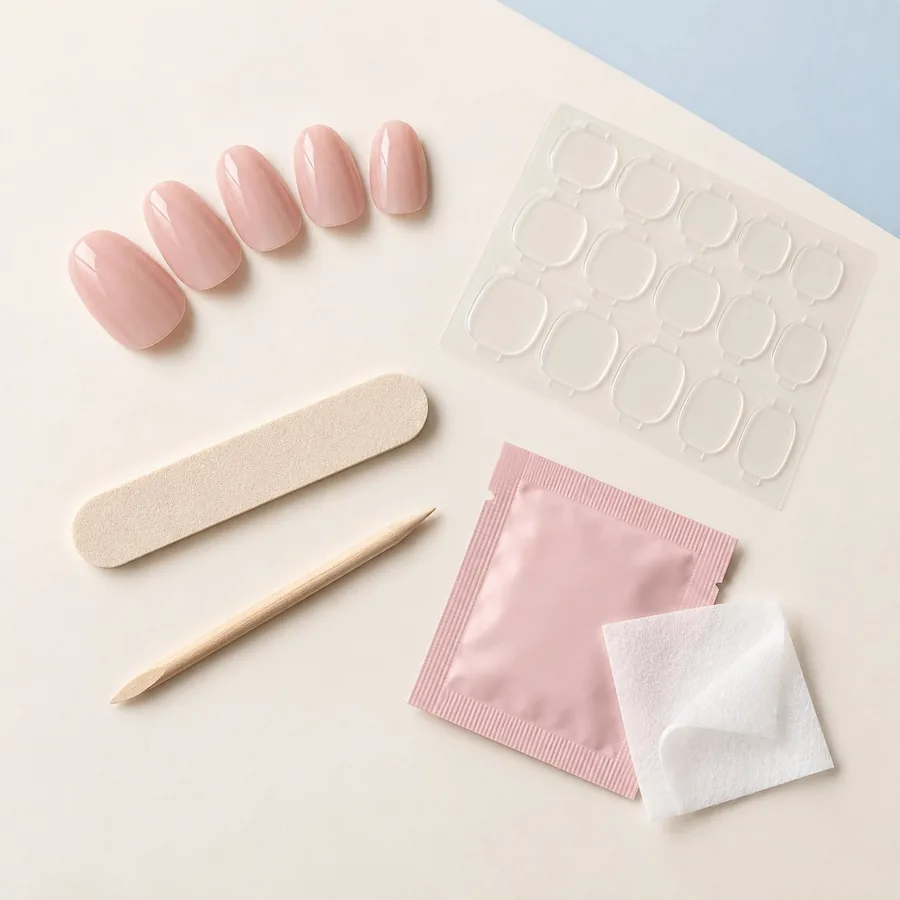
Tabs and pre-glued nails use adhesive even when no separate bottle is needed. For a concrete example, Doonails lists two tab formulations depending on the batch: one includes Ethylhexyl Acrylate, the other Acrylates Copolymer. This illustrates why tabs are not automatically acrylate-free; it does not establish suitability or unsuitability for your particular allergy.
Check the supplied tab or pre-applied adhesive separately from the plastic nail cover. A material statement about the cover does not describe the adhesive.
Request information your dermatologist can use
FDA explains that nail cosmetics sold at retail to US consumers must carry ingredient information. Save clear photographs of the packaging and ingredient panel. Identify the exact product, size, country of purchase, and batch when available; a different bottle from the same brand may have a different formula.
A useful manufacturer request is: Please provide the current ingredient list and label for this exact adhesive and batch, explain which ingredients your acrylate-free or HEMA-free claim excludes, and confirm whether the formula differs between markets or batches. I need the information for a dermatology consultation.
- Request separate ingredients for glue, tabs, primer, preparation products, and remover if bundled.
- Ask for clarification when the box, website, and manufacturer reply disagree.
- Keep the written reply and its date; do not treat missing information as confirmation that an ingredient is absent.
Use clinical testing rather than a home adhesive test
A dermatologist can assess whether a reaction is allergic contact dermatitis and whether medical patch testing is appropriate. Bring the product information, a symptom timeline, and previous test results. AAD explains that testing can identify more than one relevant substance and guide an avoidance plan.
Do not put raw nail glue, uncured gel, or acrylate monomers on your skin as a home patch test. DermNet specifically warns that testing acrylate monomers as supplied can cause sensitization, meaning a new allergy. Clinical testing uses a controlled assessment chosen by the clinician.
Choose an alternative after clarifying the restriction
The useful outcome is a product-specific decision based on your diagnosed allergens and the complete formula. Ask which ingredient names to avoid and whether the proposed alternative fits that plan. Switching brands, attachment methods, or lamp systems alone does not answer those questions. If symptoms are active, pause new products and seek medical advice.
A few common questions
Can I switch to glue tabs after a reaction to nail glue?
Check the tab ingredients and ask a dermatologist about the cause of the reaction first. Tabs use adhesive and may contain acrylate ingredients. Changing the format does not establish that the new product suits your individual allergy.
Sources & reading notes
This editorial summary of the linked health resources has not been medically reviewed. A clinician can assess your symptoms and individual circumstances.
- FDA: nail-product ingredients, labels, and reactive monomers
- FDA: hypoallergenic cosmetic claims
- AAD: medical patch testing for contact dermatitis
- DermNet: acrylate allergy and why not to self-test raw monomers
- Clinical review: Contact Sensitization to Allergens in Nail Cosmetics
- Doonails: actual adhesive-tab and glue ingredient examples