Choose the format whose design, fitting or painting process, upkeep, and removal you can manage. A category name alone cannot determine your best option.
First, decide what you mean by gel
This comparison uses gel to mean gel polish applied in coats and cured with the specified lamp. OPI's GelColor instructions, for example, include base, color, and top coats with curing between stages. Gel polish adds a coating; it does not by itself create the length of an extension.
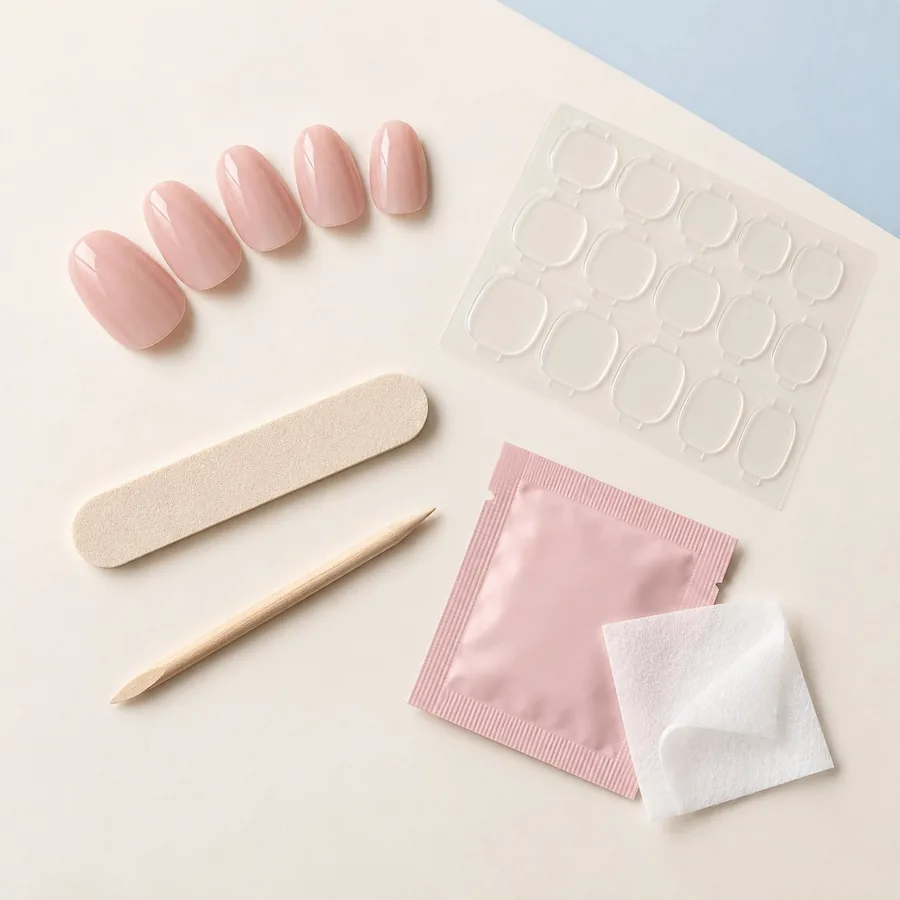
Conventional press-ons are preformed covers attached with nail glue, separate tabs, or pre-attached adhesive. Those attachment methods do not require a curing lamp. A cover attached with a curing gel belongs to a different system. Builder gel and gel-cured extensions have their own equipment and procedures, so keep them outside this comparison.
Compare the decisions each format asks you to make
A press-on comes with a defined outline and underside curve, so finding comfortable sizes is part of the process. With gel polish over natural nails, you work with their existing length and shape. Any added extension changes the service you are comparing.
| Question | Conventional press-ons | Gel polish on natural nails |
|---|---|---|
| Where does the design come from? | A finished cover selected before attachment | Color and artwork applied during the manicure |
| What creates the outline? | The chosen cover, within its permitted adjustments | The natural nail's shape and free edge |
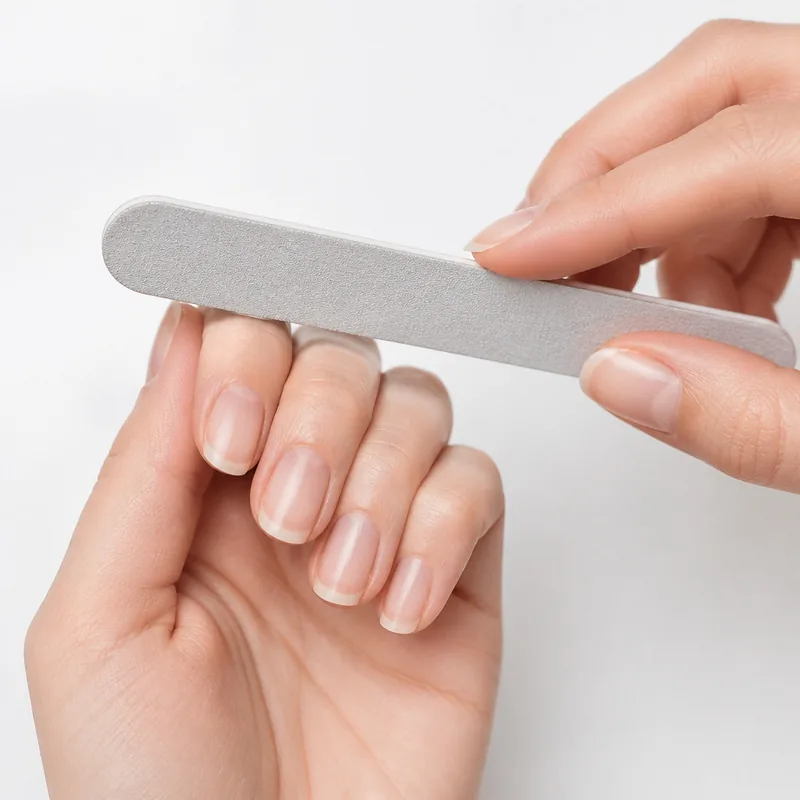
| What equipment matters? | Compatible adhesive and the kit's specified supplies | The matched polish system, lamp, and preparation supplies |
| What happens at removal? | The adhesive and cover determine the method | The gel formula determines the removal process |
Allow time for both ends of the manicure
An attachment step that takes little time can still follow a longer first-time sizing session. Count sorting, preparation, any stated setting period, and removal when evaluating press-ons. For a salon gel manicure, include travel, the appointment, and the eventual removal visit or approved home process.
For one evening, check whether your chosen system supports removal on that schedule. For a recurring manicure, think about the upkeep you are willing to do. Neither a box claim nor another person's routine establishes your wear time. Adhesive, fit, application, and daily activities affect the result.
Keep product suitability separate from convenience
A lamp-free press-on routine does not establish that a product is suitable for your skin or nails. FDA notes that nail products can cause reactions. AAD's gel guidance discusses nail damage, UV exposure during curing, and avoiding picking off gel polish. These are considerations to assess, not proof that one category is universally safer.
Read the exact products' warnings and removal instructions. If you have persistent nail problems or a history of reactions, seek individual advice before choosing either format. An inconvenient removal plan is a reason to reconsider the manicure before application.
A few common questions
Are press-on nails always quicker than gel?
Compare the full routine. First-time sizing, preparation, setting guidance, travel, and removal can change the time involved. There is no universal total.
Do press-on nails need a UV lamp?
Conventional nail-glue and adhesive-tab press-ons do not. Gel-cured extension systems have different requirements and are not interchangeable with those methods.
Does gel polish add length like a press-on?
Gel polish coats the nail. Adding length requires another component, such as an extension, which changes the comparison.
Sources & reading notes
This guide explains general considerations. Product labels and instructions vary, so check the specific kit and adhesive you use.
Get to know Kittiva.
Explore the designs and kit details on the brand’s own website. Check current contents and delivery availability before choosing.
Read our Kittiva spotlightThis editorial project supports Kittiva.