Compare the exact finished-cover system with the exact acrylic service, including fit, maintenance, total spending, and removal. A convenient format is not a guarantee of suitability for your nails.
Define the products before comparing them
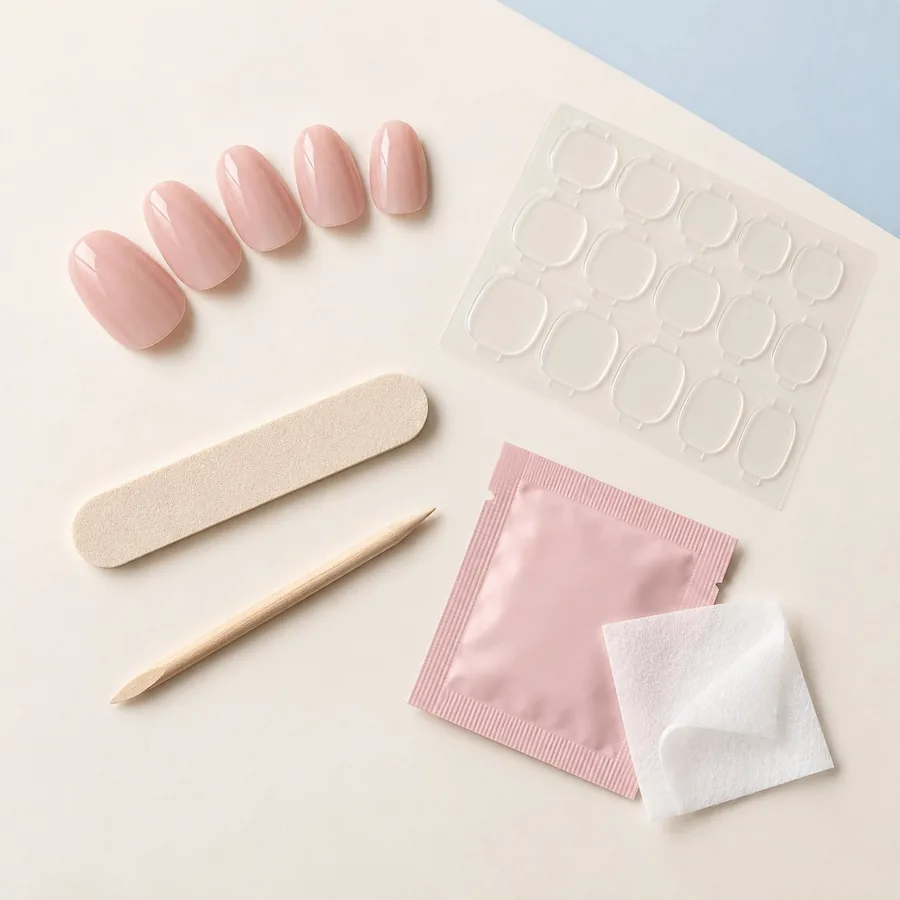
Here, conventional press-ons means finished covers attached with compatible nail glue, separate tabs, or pre-applied adhesive. You select the size and outline before attachment. KISS ICON Remarkable is one documented example with separate instructions for its supplied tabs and glue.
Acrylic in this comparison means a liquid-and-powder enhancement built over the natural nail, a tip, or a form. OPI’s acrylic education distinguishes tips and overlays from sculpting on a form. Its application guide describes shaping the mixed product and letting it set before refinement.
Acrylic service and gel-polish finish are separate choices: OPI also documents an optional GelColor finish over its acrylic work. A curing lamp used for that finish does not turn the underlying service into a conventional press-on manicure. A preformed nail marketed as acrylic-look should likewise be identified by its actual attachment instructions.
Compare the fit and work involved
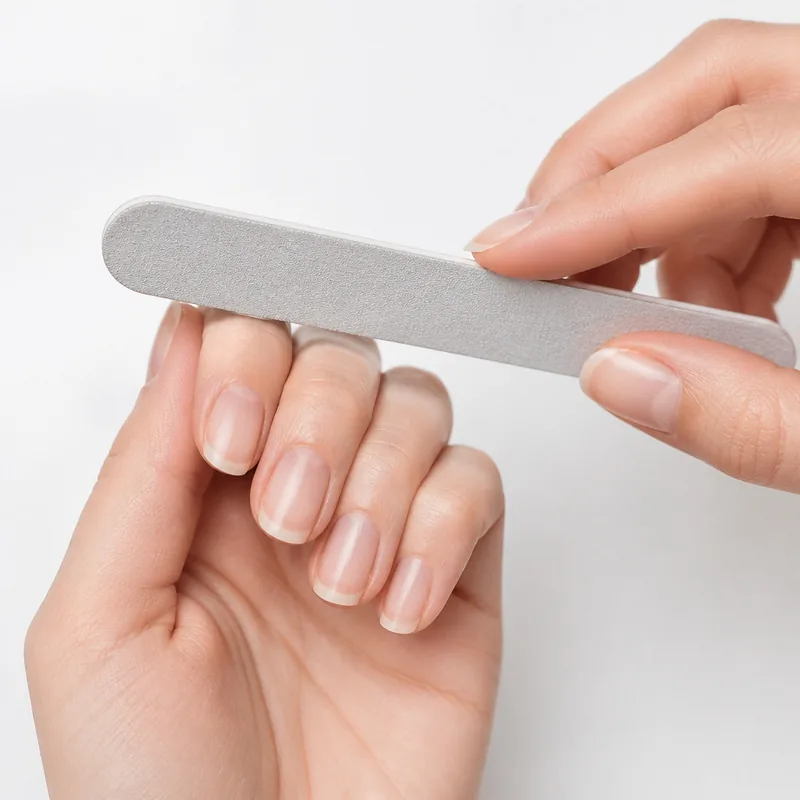
With a press-on, a finished underside has to match your natural nail. With an acrylic service, the enhancement is shaped during application, but that does not remove the need for appropriate preparation, product handling, and a comfortable result. Neither format should require you to accept pain.
For example, changing a finished almond press-on to another width means checking the actual covers available. Asking for a different acrylic outline changes the work you discuss with the technician. The design photograph alone does not describe either fitting process.
| Decision | Finished press-ons | Liquid-and-powder acrylic service |
|---|---|---|
| Shape and fit | Select suitable preformed sizes, curve, and length. | Discuss the overlay or extension, outline, and length before the service. |
| Application work | Sort, dry-fit, prepare, attach, and complete the stated aftercare. | Account for preparation, building the enhancement, setting, shaping, and the chosen finish. |
| Upkeep | Follow that adhesive’s lifting, replacement, and permitted-reuse guidance. | Ask about reassessment, maintenance appointments, and whether the finish has separate upkeep. |
| Changing the look | Check removal and whether the covers can be reused. | Discuss whether a color change, rebalance, or removal is needed for the new design. |
Compare complete costs over the same period
A retail box price and an acrylic-service quote cover different purchases. For press-ons, list the usable set, any separately required adhesive, preparation and removal supplies, shipping, and tax. For the service, ask what the quoted price includes and what removal, repairs, design changes, or maintenance would add.
Choose one comparison period, such as the time until an event and the removal afterward. Write down the actual local quote and actual checkout total for that period. Keep supplies you already own separate from new cash spending. Do not treat every spare press-on as another manicure or divide the price by unconfirmed future reuses.
Include time as a separate line: first-time sizing and removal for press-ons; travel, appointment, and later maintenance or removal for a service. This produces a comparison for your plans without inventing a national price average or assuming one category is always cheaper.
Plan removal and maintenance before application
For press-ons, identify both the adhesive and cover material before choosing a remover. A reusable-cover claim does not establish that every solvent preserves its finish. For an acrylic enhancement, obtain the product-specific removal plan from the technician; do not borrow a tab-removal routine or peel away the material.
AAD notes that artificial-nail removal can involve acetone or filing and that repeated maintenance can contribute to nail damage. The actual process depends on the system. Ask what will be removed, how the natural nail is protected, and when the technician wants to reassess growth or lifting. Avoid treating a general wear claim as an appointment schedule.
If a cover or enhancement remains firmly attached, pulling harder is not the next step. Pain, a reaction, or injury calls for assessment rather than a faster cosmetic removal method.
Keep suitability separate from convenience
AAD explains that filing during acrylic preparation can thin the natural nail and that artificial-nail products can irritate skin. FDA also describes reactions to nail products and advises following ingredient warnings and directions. Press-ons still involve adhesives and removal, so avoiding a sculpted acrylic service does not establish freedom from reactions or damage.
Leave damaged nails uncovered and seek individual advice about persistent changes or a previous product reaction. Bring the actual product names and ingredients; category names are too broad to establish what caused a reaction or which alternative is appropriate.
Choose after checking the whole routine: a workable fit, understandable product instructions, realistic upkeep, and removal you can arrange. If a required part is unclear, resolve it before applying the manicure.
A few common questions
Does an acrylic-look press-on need a liquid-and-powder acrylic service?
The look or marketing name does not determine attachment. Check whether you have a finished cover with glue or tabs, a tip for an enhancement, or another documented system before choosing supplies.
Sources & reading notes
This guide explains general considerations. Product labels and instructions vary, so check the specific kit and adhesive you use.
- OPI: acrylic tips, overlays, and sculpted-form services
- OPI: liquid-and-powder application, setting, refinement, and optional gel finish
- KISS ICON: documented finished covers with separate tab and glue directions
- AAD: artificial-nail preparation, maintenance, removal, and existing damage
- FDA: nail-product ingredients, labels, and reactions